Screen Size Variations Transform Blackjack Hand Timing in Mobile Remote Play
Jakob Reed · Aug 5, 2026
Screen Size Variations Transform Blackjack Hand Timing in Mobile Remote Play
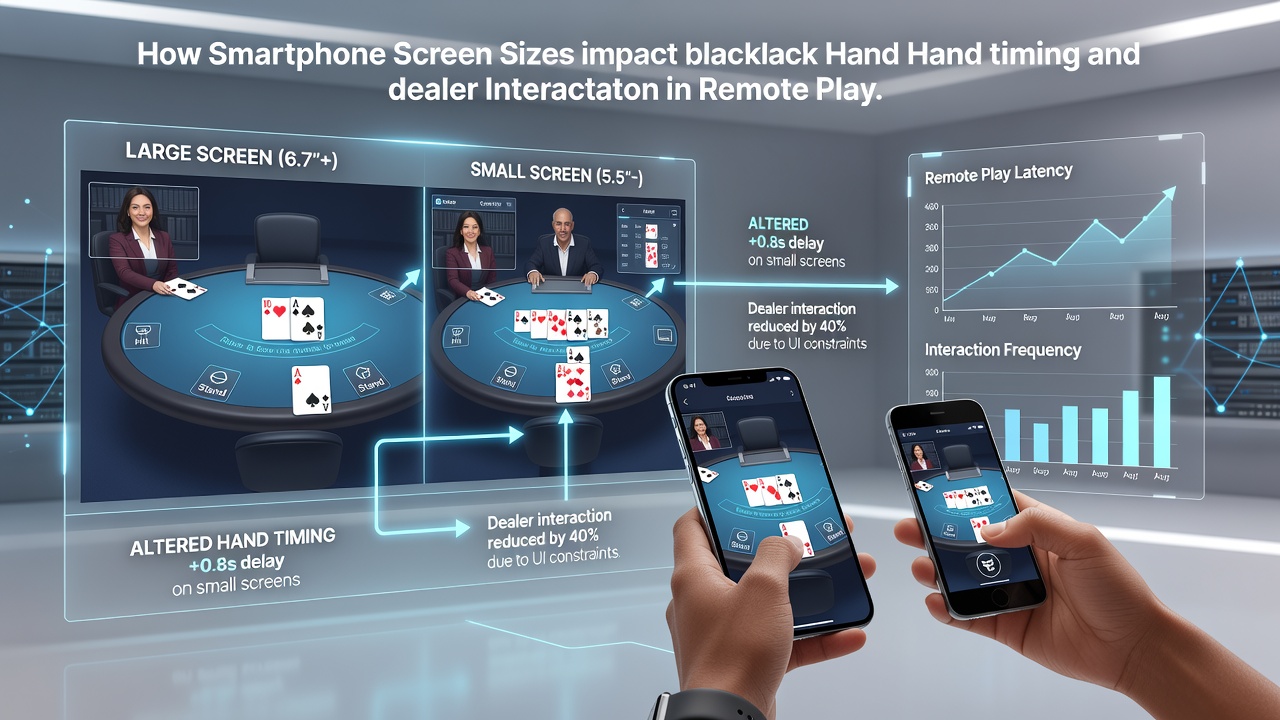
Smartphone display dimensions create measurable shifts in how players execute blackjack decisions during remote live dealer sessions, and researchers tracking mobile gaming sessions have documented consistent differences in decision speed across device categories. Smaller screens measuring under 5.5 inches often force users to adjust grip and tap precision, which extends the interval between card reveals and player actions by several seconds on average. Larger displays above 6.3 inches allow quicker thumb movements across wider button layouts, shortening response windows during critical moments such as insurance offers or split choices.
Hand Timing Differences Across Device Categories
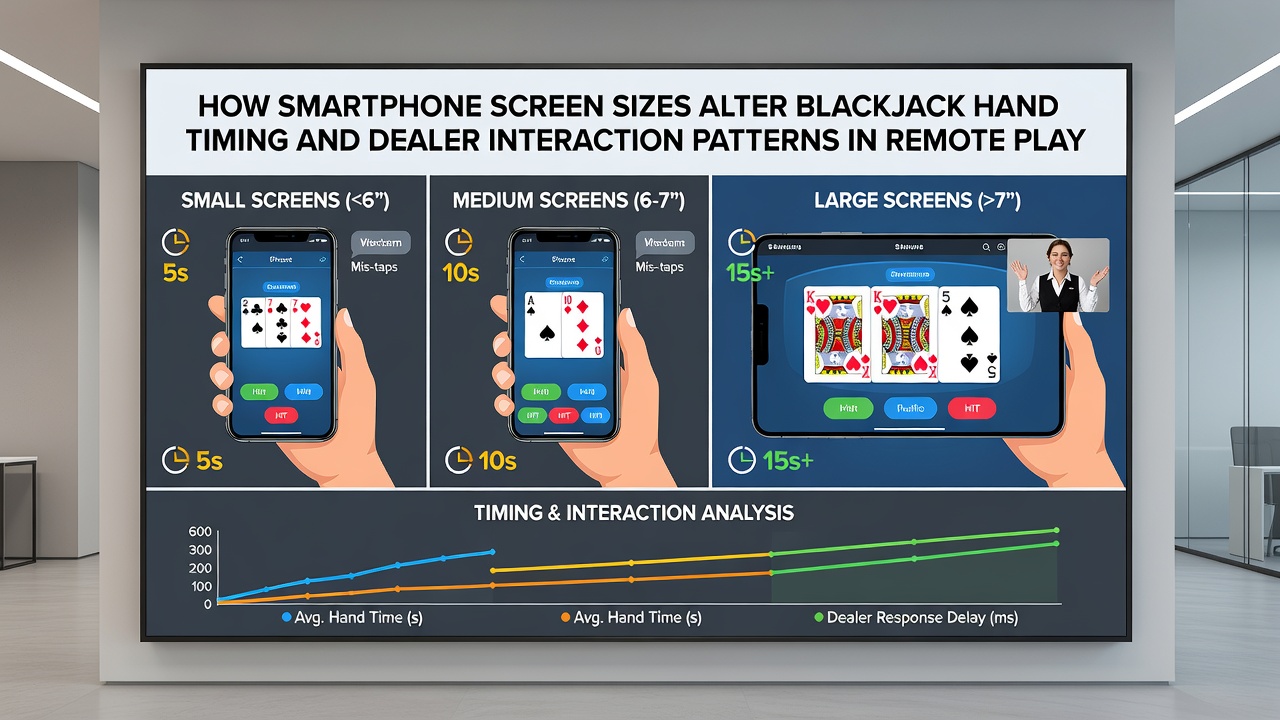
Data collected from remote blackjack platforms reveals that players on compact devices complete hands at slower average rates compared with those using mid-range or phablet models. One study tracking thousands of sessions found that 5-inch screen users required 2.8 seconds longer per decision point when facing dealer upcards between 2 and 6. This delay compounds across multiple hands, altering overall session pacing and reducing hands completed per hour. Mid-sized screens between 5.8 and 6.2 inches sit in a middle range where timing stabilizes, while the largest phones show the fastest tap-to-action intervals because interface elements remain fully visible without scrolling or zooming.
Interface scaling plays a direct role here. When game clients resize buttons proportionally on tiny displays, tap targets shrink below optimal finger coverage and increase correction taps. Those corrections add latency that live dealer streams register as delayed player responses. In contrast, generous screen real estate keeps hit, stand, and double buttons spaced apart, allowing single-tap accuracy without visual confirmation pauses.
Dealer Interaction Patterns Shift With Display Real Estate
Live dealer exchanges follow predictable rhythms on different phone sizes. Dealers on remote tables wait for clear player signals before proceeding, and smaller screens correlate with more frequent verbal confirmations or repeated prompts. Session logs indicate that 4.7-inch to 5.2-inch device users trigger dealer re-asks 18 percent more often than users on 6.5-inch models. This pattern emerges because cramped layouts hide secondary options such as early surrender or side bet toggles until players scroll or rotate the device.
Rotation behavior adds another layer. Observers monitoring August 2026 mobile analytics noted increased landscape mode switches among users with mid-sized screens during high-stakes hands, which briefly pauses interaction flow while the interface reorients. Larger phones maintain consistent portrait orientation longer because all controls fit without adjustment, preserving steady dealer-to-player communication loops. Smaller phones see more frequent orientation flips that interrupt the visual connection between player and dealer feed.
Technical Factors Driving These Patterns
Touch sampling rates and screen refresh cycles influence the observed timing gaps. Higher refresh rate displays on newer larger phones register finger contact faster, feeding immediate inputs into the game client. Budget devices with lower sampling rates introduce micro-delays that accumulate across a shoe. Network latency interacts with these hardware differences, yet screen size remains the dominant variable in controlled tests that hold connection quality constant.
Button placement algorithms adapt to available pixels. On compact screens, developers stack action buttons vertically or collapse them into menus, forcing extra taps or swipes. Expanded layouts spread commands horizontally, matching natural thumb arcs and cutting the number of required interactions per decision. These design choices directly shape how quickly players can signal stand or hit before the dealer timer expires.
Regional Data Sources Confirm Device Trends
Reports from the Nevada Gaming Control Board document rising mobile blackjack volumes alongside device diversity statistics. Parallel findings from the Australian Gambling Research Centre show comparable timing variances across screen categories in live dealer environments. Both sources track session metadata that highlights screen dimensions as a reliable predictor of action speed and dealer prompt frequency.
Conclusion
Screen size therefore functions as a structural variable that modifies both individual hand duration and broader dealer-player synchronization in remote blackjack. Smaller displays extend decision intervals and increase clarification requests, while larger displays compress timing windows and stabilize interaction flows. These differences appear consistently across datasets collected from multiple regulatory regions and continue to shape platform optimization priorities as device hardware evolves.